
Breast Augmentation
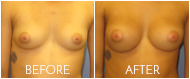
Results may vary.
Breast augmentation, also known as mammoplasty, is a surgical procedure performed to enhance the shape and size of a woman’s breasts, using breast implants. This procedure can help to make the breasts more proportionate to the rest of the body, even out breasts which are different in size or shape, and it can enlarge and reshape breasts which have lost their fullness or shape due to weight loss, pregnancy, breast feeding, or age. Breast augmentation can also be used for reconstructive purposes on patients who have undergone mastectomy or those with a congenital breast deformity.
Dr. Sureddi has indicated that the best candidate for breast augmentation is a woman over the age of 18 who is unhappy with her breast size or shape and looking to enhance their appearance. Patients must be psychologically stable, physically healthy, and have realistic expectations. Breast augmentation can enhance the look of the breasts, and often has the added benefit of increasing one’s self confidence.
The Surgery
Breast augmentation typically takes between one to three hours to complete and may be performed under general anesthesia or a combination of local anesthesia and sedation.
There are several different possible locations for the incisions: axillary, which is under the armpit, inframmary, which is within the crease below the breast; and periareolar, which is around the nipple. Once the incision is made, the breast tissue is lifted to make a space or pocket into which the implant is then inserted. The implant may be placed in one of two locations: subglandular, which is above the chest muscle, or submuscular, which is beneath the chest muscle. The implant is typically a silicone shell that is usually filled with a saline solution. Most implants are inserted empty and then filled, allowing for minimal scarring. After the implant is inserted, the incisions are then closed. Tape may be used for added support and the breasts may also be wrapped with gauze or other bandages. A drainage tube may be placed at the incision site if necessary in order to drain fluid.

Breast augmentation involves many different options and techniques. Choices must be made about the incision location and the implant placement. The choices that are right for you will depend upon your individual circumstances, and, thus, are best made with the help of Dr. Sureddi. In terms of incision placement, the axillary and inframmary placements are typically associated with fewer complications with future breast feeding, though both of these placements do produce a visible, though small, scar. The periareolar placement involves a less visible scar, but it is associated with an increase in breast feeding complications. There is also a fourth placement, known as the umbilical or endoscopic placement, which involves the placement of the implant through the naval or belly button, though this is a relatively new technique, and generally not recommended.
Regarding placement of the implant, there is a choice between subglandular and submuscular. For the subglandular placement, the implants are placed above the chest muscle. Though this placement typically involves shorter surgery and recovery times, less pain and easier accessibility in case of reoperation, it may also involve an increased risk of implant palpability, capsular contracture, and mammography interference.
On the other hand, submuscular placement, or beneath the chest muscle, typically involves a decreased risk of capsular contracture, implant palpability, and mammography interference. However, this placement is also associated with longer surgery and recovery times, more pain, and less accessibility in case of reoperation.
The Recovery
After surgery, patients often feel somewhat sore, tired and stiff, which can last for several days. Some degree of pain is usually experienced because the procedure stretches the tissues, though the submuscular placement of the implants is typically associated with more pain. Prescribed pain medication can help alleviate any pain or discomfort you experience. Dr. Sureddi may also request that you keep your arm extensions to a minimum, raising your elbows no higher than your armpit, for three to five days after surgery.
A few days after surgery, any bandages that were applied are usually removed. Many times, patients are required to wear a support bra or compression bandage to help support and position the breasts. Drainage tubes, if used, are usually removed within a day or two after surgery. Sutures are usually removed within a week to ten days after surgery.
The breasts may feel tight at first as the skin adjusts to the new breast size, and the breasts themselves may seem hard at first, though they do soften in time. Swelling is common and usually begins to fade within a few weeks. Increased sensitivity to physical contact of the breasts may occur for a month or longer. The scars will be pink right after surgery and for several weeks, but will fade over a period of several months.
The amount of time it takes to recover will be different for each patient and for each technique. However, most patients find that they can return to work a few days after surgery. Nonetheless, you will need to refrain from overly strenuous activities for several weeks.
Risks and Complications
All surgery carries some degree of risk. However, there are certain factors which increase your risk of complications. Be sure to inform Dr. Sureddi of any medical conditions that you have, if you smoke, if you are on any medications, and if you have had any previous surgeries near the site to be treated. You can greatly reduce these risks by carefully following all pre and post surgery instructions provided by Dr. Sureddi.
If you have been considering enhancing your breast through enlargements, we encourage you to contact our office today. Call 203-264-6334.